Inspiring Creativity: Fun Activities for Young Minds
/
credit: Unsplash.
It’s a familiar scene in any household with children: the echo of "I'm bored!" bouncing off the walls. Whilst our first instinct might be to rush in with a solution, these quiet moments are often the very soil in which creativity begins to sprout. Nurturing this innate ability to imagine, invent, and explore is one of the most wonderful parts of parenting. It’s not about scheduling every minute with structured classes, but about providing the right environment and tools for their minds to wander and create.
From transforming a cardboard box into a spaceship to discovering the magic of a bug's life in the garden, a child's world is brimming with creative potential. As parents, our role is to gently guide them, offer inspiration, and celebrate their unique way of seeing the world. This guide offers fun, practical, and engaging activities designed to spark that creative fire in your little ones, turning moments of boredom into bursts of brilliance.
The Power of Imaginative Play
Before children can write stories or paint masterpieces, they first create them in their minds. Imaginative play is the foundation of all creative expression. When a child dons a cape and becomes a superhero or sets up a teddy bear's picnic, they are doing far more than just passing the time. They are building entire worlds, solving complex problems, and developing crucial social and emotional skills. Research consistently shows that pretend play encourages creativity by allowing children to experiment with different roles and scenarios in a safe space.
Encouraging this is often as simple as providing a few basic props and stepping back. A 'dressing-up box' filled with old scarves, hats, and mismatched clothes can become a source of endless characters. A collection of cardboard boxes can be a castle one day and a secret submarine the next. These simple imagination activities for children don't require expensive toys; they thrive on freedom and possibility. Playing 'shop' with items from the pantry teaches them about numbers and social interaction, whilst building a den with blankets and chairs develops their engineering and teamwork skills. The key is to let their imagination lead the way, offering a prompt only when needed.
Hands-On Projects for Curious Kids
There's a special kind of magic that happens when a child gets their hands messy and creates something tangible. Hands-on projects provide a fantastic outlet for creativity, allowing kids to see their ideas take shape in the real world. These activities help develop fine motor skills, problem-solving abilities, and a sense of accomplishment that builds confidence. From simple crafts to more complex builds, the possibilities are endless and can be tailored to any age or interest.
For younger children, activities like painting with their fingers, making collages from old magazines or crafting creatures from play-dough are perfect. As they get older, their projects can become more ambitious. You could try:
Building a DIY Volcano: A classic science experiment that combines creativity with a bit of chemistry. All you need is a plastic bottle, some modelling clay, bicarbonate of soda and vinegar for an impressive eruption.
Creating a Stop-Motion Film: Using a smartphone or tablet, children can bring their toys to life. They can create sets from cardboard, write a simple story, and learn the basics of animation, one frame at a time.
Constructing a Marble Run: Using toilet paper rolls, sticky tape and a cardboard backboard, kids can design and build their own intricate marble run, learning about gravity and engineering as they go.
Sometimes, a brilliant project can be sparked by a specific kit or a fascinating new toy. A great gift and gadget retailer can be an excellent source of inspiration, offering everything from model-building kits and beginner science sets to remote control vehicles that can become the star of an imagined adventure. There are many top creative activities that begin with a single, exciting object that captures a child's attention and fuels their desire to build, experiment, and create.
Digital Tools for Creative Expression
In our increasingly digital world, it’s easy to view screen time as the enemy of creativity. However, when used thoughtfully, technology can be an incredibly powerful tool for creative expression. Instead of passive consumption, we can guide our children towards apps and platforms that encourage them to become creators themselves. The key is to find a healthy balance and choose digital experiences that are interactive, open-ended, and empowering.
For the budding artist, apps like Procreate (on iPad) or Autodesk Sketchbook (available on most devices) offer a limitless digital canvas with a vast array of brushes, colours and effects. They allow children to experiment without the fear of making a mistake, as the 'undo' button is always there to help. For aspiring storytellers and filmmakers, apps like Stop Motion Studio make it easy to create animated movies, whilst iMovie or CapCut allow for simple video editing.
Coding is another fantastic way to merge logic with creativity. Platforms like ScratchJr (for ages 5-7) and Scratch (for ages 8+) use simple, block-based programming to let kids create their own interactive stories, games and animations. It teaches them computational thinking whilst allowing them to bring their imaginative ideas to life on screen. By reframing technology as a creative tool rather than just a distraction, we can help our children develop vital digital literacy skills that will serve them well in the future.
Outdoor Adventures That Spark Joy
Creativity isn't confined to the four walls of a playroom. The great outdoors is a vast, ever-changing canvas that can inspire wonder, curiosity, and boundless imagination. Stepping outside provides a rich sensory experience: the feeling of grass underfoot, the sound of birdsong, the scent of rain on the pavement, which can fuel all sorts of creative endeavours. An adventure doesn't have to be an elaborate, planned-out trip; often, the most magical moments happen in your own back garden or local park.
A simple walk can be transformed into a quest. Give your child a mission: to find five different types of leaves, spot three different colours of flowers, or find a stick that looks like a wizard's wand. These scavenger hunts encourage them to observe their surroundings closely and see the world with an artist's eye. Building a den in the woods is another classic activity that combines engineering, teamwork and imaginative play.
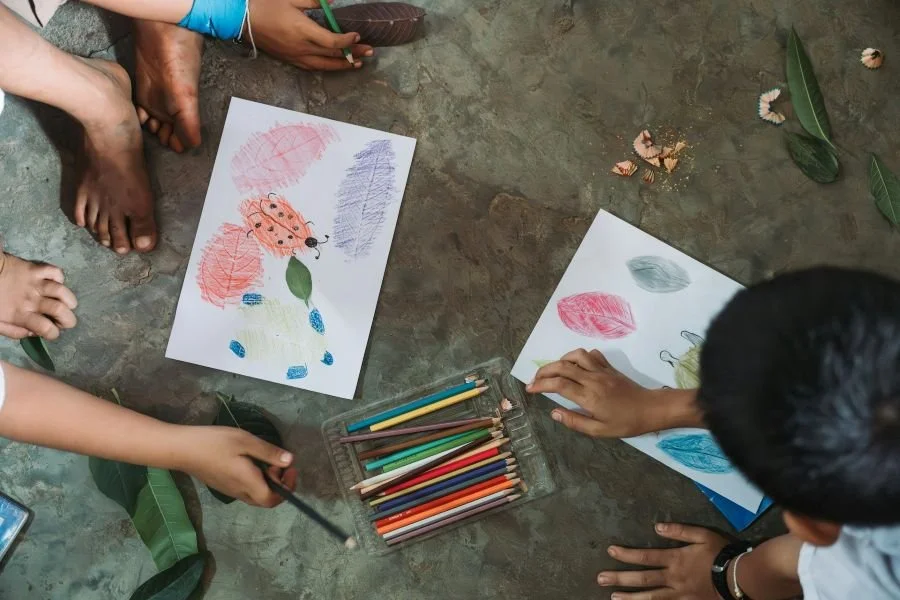
Nature itself provides the best art supplies. Encourage your children to create 'land art' using fallen leaves, petals, twigs and stones. They can make patterns, create pictures of animals, or build tiny fairy houses at the base of a tree. The beauty of nature art is its impermanence; it teaches children to appreciate the process of creating without being attached to the final product. Even just lying on the grass and watching the clouds drift by can be a powerful creative exercise, as shapes morph into dragons, ships, and faces, sparking stories and daydreams.
Encouraging Lifelong Learning
Ultimately, inspiring creativity in our children is about fostering a mindset, not just completing a series of activities. It’s about cultivating a love of learning, a sense of curiosity, and the resilience to try new things. Our role is to be their biggest cheerleader, celebrating their efforts and unique perspectives, regardless of the outcome. When a child proudly shows you their lopsided drawing or a story with questionable spelling, focus on the ideas and the passion behind it. Ask open-ended questions like, "Tell me about what you've made," or "What was your favourite part of creating this?"
Modelling creative behaviour ourselves is also incredibly powerful. Let your children see you trying a new recipe, learning to play an instrument, doodling in a notebook, or getting stuck into a DIY project. When they see that learning and creating are lifelong pursuits, they are more likely to adopt that attitude themselves. It's about creating a home environment where questions are welcomed, mistakes are seen as learning opportunities, and curiosity is the compass that guides exploration. By focusing on developing creative thinking as a core skill, we are not just preparing them for artistic pursuits; we are equipping them with the flexibility, ingenuity, and problem-solving abilities they will need to thrive in all areas of their lives.
Creativity isn't a special talent reserved for a select few; it's a fundamental human quality that exists in every child. Our job is simply to provide the space, the encouragement, and the occasional spark to help it burn brightly.
Disclosure: This is a collaborative post.