How to Get Off the Beaten Path in Europe When You're Travelling With Kids
/Jeremy Albelda, creator of The World or Bust, has spent years exploring how travel changes when you slow down and look beyond the obvious stops. For families visiting Europe, that mindset is especially useful. The best memories often come from smaller towns, quiet landscapes, and easy detours that give children room to explore without overwhelming everyone.
Travelling through Europe with kids does not have to mean choosing between major cities and beach resorts. In fact, some of the most rewarding family experiences happen in the places just outside the main tourist routes: hilltop villages, lake towns, local markets, small castles, regional food stops, and countryside trails.
The key is not to make the trip more complicated. It is to make it better planned.
Why Off-the-Beaten-Path Travel Works for Families
Parents often assume lesser-known destinations will be harder with children. Sometimes the opposite is true.
Smaller European towns usually mean fewer crowds, shorter walking distances, easier meals, and more relaxed days. Instead of navigating packed train stations or standing in museum queues for hours, families can spend time in places where children can move, ask questions, and actually absorb what they are seeing.
There is also a growing reason to look beyond Europe’s busiest hotspots. Eurostat reported that EU residents made 1.14 billion tourism trips with at least one overnight stay in 2023, with 73% of those trips being domestic. That means Europeans themselves are travelling heavily within the region, so visitors benefit from looking beyond the obvious city-centre checklist.
For more family travel planning ideas, Mammaprada’s guide to making family travelling easy and relaxing is a useful place to start.
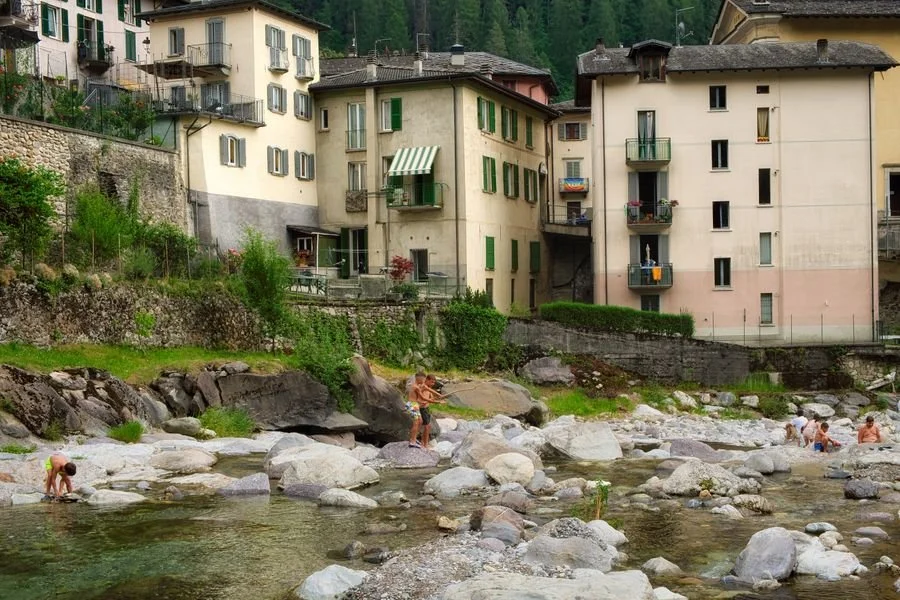
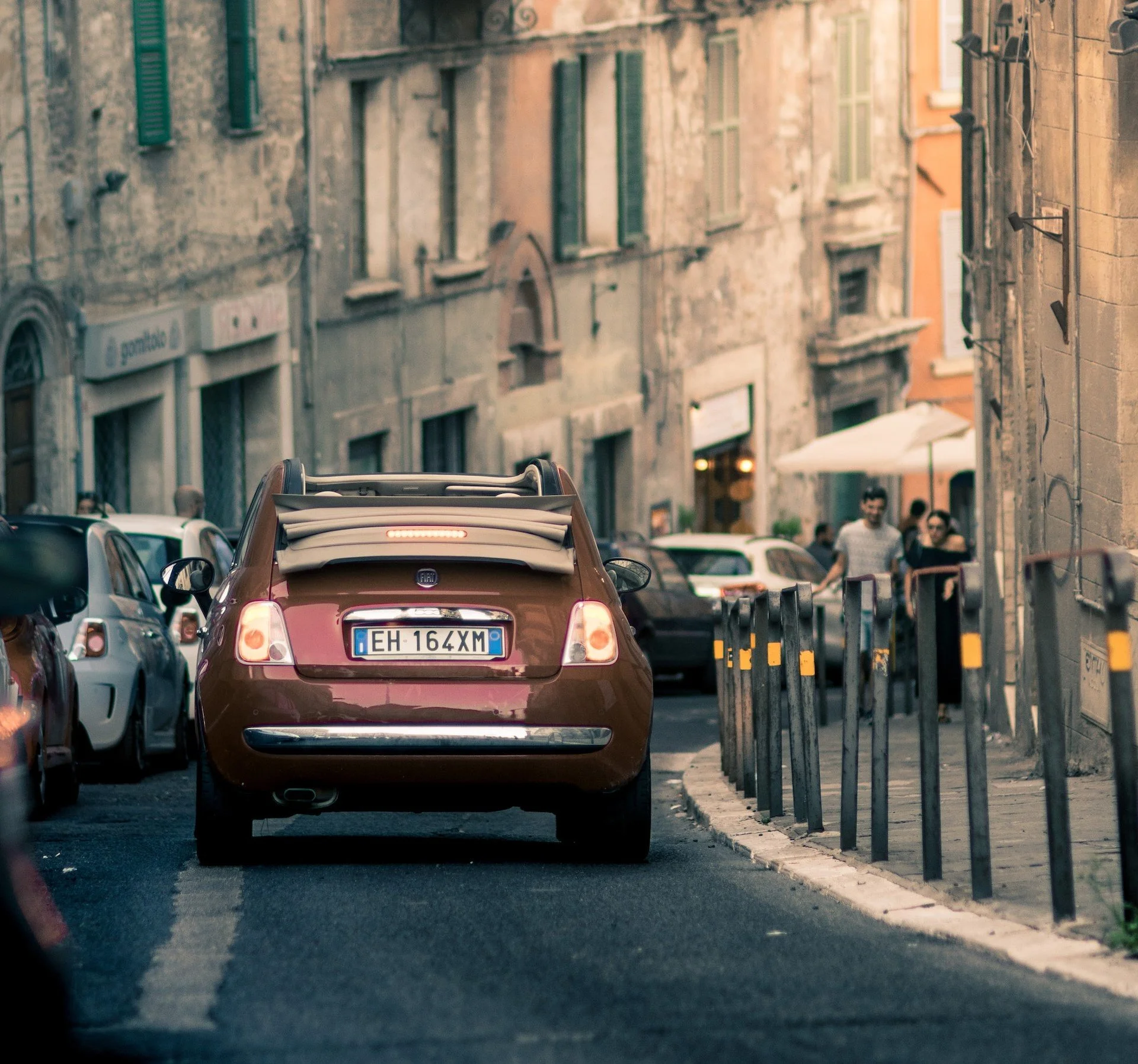
credit: pexels.
Choose a Base, Then Add Small Detours
The easiest way to explore deeper with kids is to avoid constant hotel changes. Pick one comfortable base, then add short trips nearby.
This works better than trying to “see Europe” by changing cities every two nights. Children need routine, sleep, and downtime. Parents need fewer bags to repack.
A good family base should have:
Reliable transport links
Supermarkets or easy casual food
Parks or open space
Family-sized accommodation
At least two good day trips nearby
From there, you can add smaller destinations without turning the holiday into a logistical test.
Sample Family Itineraries Beyond the Obvious
Here are a few practical route ideas that give families a broader view of Europe without overloading the schedule.
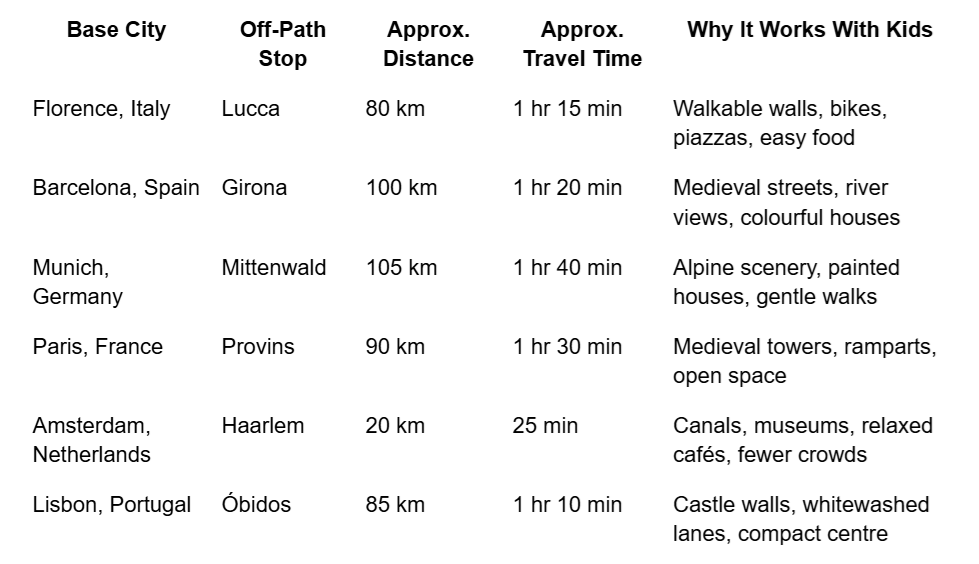
These are not remote destinations. That is the point. With children, “off the beaten path” does not need to mean difficult. It means choosing places with character that are not the same crowded stops everyone else has planned.
Make the Journey Part of the Day
With kids, transport can either drain the day or become part of the adventure.
Trains are often excellent in Europe, especially between major cities. But they are not always ideal for countryside stops, village-to-village routes, or itineraries involving luggage and younger children.
For families who want more flexibility, private transfers with stops can make sense when travelling between two cities. Instead of spending a travel day only moving from hotel to hotel, you can stop at a castle, lake, village, viewpoint, or local restaurant along the way.
This works particularly well when the distance is too short to justify flying but too awkward for multiple trains and taxis.
Pick Destinations That Match Your Children’s Energy
Not every hidden gem is family-friendly. A beautiful village with steep lanes and no shade may be difficult with a toddler. A remote hiking trail may sound great until someone needs a toilet ten minutes in.
Match the destination to your children’s ages.
For Toddlers
Choose places with short loops, parks, and easy food. Lucca, Haarlem, and smaller lake towns work well because they are compact and manageable.
For Primary School Children
Look for castles, caves, boats, farms, and old walls. Children at this age often enjoy places where history feels physical rather than abstract.
For Teens
Add active elements: cycling, kayaking, food tours, photography stops, or a scenic hike. Teens are more likely to enjoy quieter places when there is something to do, not just something to look at.
Mammaprada’s post on why a European walking holiday is the ultimate family vacation is a good match for families who want outdoor time without planning a high-pressure adventure trip.
Avoid the Midday Crowd Window
Even smaller destinations can get busy, especially in summer. The easiest fix is timing.
Arrive early, eat before the lunch rush, and use the middle of the day for low-pressure activities. That might mean a picnic, playground stop, gelato break, or quiet drive between towns.
A useful rhythm is:
Morning: main attraction
Lunch: casual local meal
Early afternoon: rest, scenic drive, or playground
Late afternoon: short walk or second stop
Evening: return to base
This keeps children from burning out before the day is over.
Let Food Lead the Route
Food is one of the easiest ways to make Europe more interesting for children. Instead of only planning around monuments, build in local food stops.
Try:
Fresh pasta in a small Italian town
A bakery stop in rural France
Churros or tapas outside central Madrid
A market lunch in Portugal
Apple strudel in an Alpine village
Children may not remember every church or museum. They will remember the hot chocolate, the pastry, the picnic, or the tiny restaurant where the owner made them laugh.
Disclosure: This is a collaborative post.