Why Moving House Feels Bigger When You Have a Family
/Moving house is never really about the boxes.
That’s what I always think people get wrong.
Yes, there’s the obvious chaos — the missing kettle, the drawer full of mystery chargers, the children asking where their favourite pyjamas are for the fourth time that night. But when you move as a family, especially with young children, the bigger shift is rarely the physical one.
It’s the feeling that the rhythm of the house has disappeared overnight.
The breakfast routine changes. The way school bags used to land by the door changes. Even the small comfort of knowing where everyone naturally gathers at the end of the day suddenly vanishes.
And children notice all of it, even when they don’t say much.
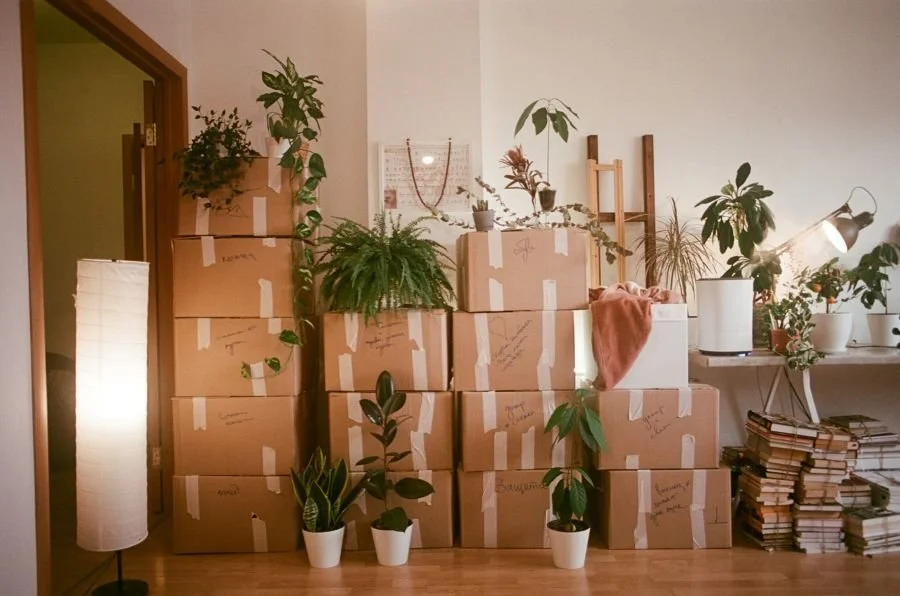
credit: unsplash.
Home Is Built Through Tiny Family Habits
I’ve always thought children settle into a home through repetition rather than decoration.
It’s not the fresh paint or the new dining table that makes a house feel safe. It’s knowing which cupboard the cereal bowls are in. It’s remembering where the shoes go after nursery pick-up. It’s learning which bedroom window gets the morning sun.
These tiny repeated moments create belonging.
That’s why the first week after a move can feel surprisingly emotional. Everyone is physically in the same place, yet the house hasn’t learned your family’s habits yet.
And in many ways, you haven’t learned the house either.
A recent Australian Bureau of Statistics release noted that 104,100 people moved interstate in just three months, which says so much about how common family relocation has become in modern life. It’s not just adults chasing work or affordability. It’s entire households rebuilding routines from scratch.
Children Often Need Familiar Patterns More Than Familiar Rooms
One thing I’ve learned over time is that children adapt faster when routines return quickly.
Dinner at the usual time.
Baths in the same order.
Books before bed, even if the books are still stacked in moving cartons.
The room may be unfamiliar, but the rhythm tells them they’re safe.
The Practical Side Matters More Than People Admit
The funny thing is, the most important moving decisions are often the ones nobody posts about.
It’s not the pretty shelves.
It’s making sure the beds arrive on the first day. Making sure school uniforms are easy to find. Making sure the car seat, the buggy, and the box with the favourite stuffed toy didn’t somehow end up at the back of the truck.
A family friend recently booked with Find a Mover for a long-distance move, and what helped most wasn’t the abundance of choice — it was having a clear arrival window from the moving company so the children’s routines could continue with as little disruption as possible.
That predictability matters more than people realise.
The Second Car Is Often the Hidden Family Stress
Families especially tend to underestimate this.
One parent drives ahead with the children or catches a flight during an interstate relocation, while the second car or larger family vehicle becomes a last-minute headache.
I’ve seen families quietly solve this by organising their motorbike, boat or car transport interstate with VehicleMove, simply so they can keep the relocation focused on the children rather than turning it into an exhausting multi-day road trip.
It’s one less layer of stress during a week that already feels full.
A New Home Changes Family Life in Unexpected Ways
The part I find most interesting is how a move quietly changes family behaviour.
Suddenly one room becomes the reading room.
The kitchen island becomes the homework spot.
The hallway bench that looked decorative online somehow becomes the daily dumping place for school letters, lunchboxes and random socks.
Homes reveal themselves through family use.
Some Spaces Become More “Ours” Than Others
This is especially true in homes where culture and language are such a big part of daily life.
For bilingual families, routines often carry language with them too.
The kitchen may become the place where one language is naturally spoken. Bedtime stories may return in another. Even the way grandparents video call into the new house helps children reconnect the new environment to the identity they already know.
That’s where a house becomes more than walls.
It becomes continuity.
Moving Gives You a Chance to Reset What Family Life Looks Like
There’s also something quietly beautiful about moving with children.
It gives you permission to reset the systems that no longer worked.
The cluttered hallway that caused chaos every morning? Now you create better storage.
The toys that never had a proper home? Suddenly they do.
The family schedule that felt rushed and messy in the old place? A new home gives you a chance to rebuild it with more intention. It's about knowing what's a balanced family routine and how to build one.
Reaching out to a friend in Auckland New Zealand, a friend recently said this was the part she appreciated most after using booking house movers in Auckland to coordinate the home and vehicle inter-island move was that the process felt simpler, which meant more mental space for the family systems that mattered once they arrived.
And honestly, that’s what shapes daily life far more than unpacking the “nice” things.
The House Starts Feeling Like Home in Fragments
Nobody really remembers the admin side.
What families remember is smaller.
The first breakfast at the new kitchen bench.
The first movie night on the floor before the sofa arrives.
The first moment the children run instinctively to their room without asking.
That’s when you realise the move is working.
Not because the house looks finished.
But because life has started happening naturally inside it.
Home Comes Back Through Routine, Not Perfection
That’s probably the most comforting part of moving as a family.
The house does not need to be perfect to feel right.
It just needs enough familiar rhythm for everyone to exhale.
And once the routines return, the house begins to soften around your family’s life until it no longer feels new at all.
It simply feels like home.
Disclosure: This is a collaborative post.