Is Gozo Worth Visiting? What to Know Before You Go
/I get asked this a lot. People planning trips to Malta want to know if they should bother with Gozo or just stick to the main island. The short answer is yes, absolutely. But there is more to it than that.
Gozo is Malta’s smaller sister island, about a quarter of the size and with maybe 30,000 people living there full time. It sits just north of Malta across a channel that takes about 20 minutes to cross by ferry. Some people describe it as what Malta used to be like before all the development and construction. Quieter. Greener. More rural. The kind of place where old men still sit outside their houses in the afternoon and church bells mark the hours.
I have been living in Malta for a couple of years now and I have lost count of how many times I have been over to Gozo. It is one of those places that grows on you. The first time I went I thought it was nice but not essential. By the third or fourth visit I was actively recommending it to everyone I met.
So is it worth visiting? Definitely. But whether you do a day trip or stay longer depends on what you want out of it.
credit: unsplash.
What is actually there
The main town is Victoria, also called Rabat by locals just to confuse everyone. It sits in the middle of the island and is dominated by the Citadel, this old fortified city on top of a hill. The Citadel was recently restored and honestly it is one of the nicest spots on either island. You can walk around the ramparts and see pretty much the whole of Gozo spread out below you. On clear days you can see all the way to Malta.
The cathedral inside has this optical illusion ceiling painted to look like a dome but it is actually flat. They ran out of money during construction apparently. Classic.
Dwejra Bay on the west coast is where the famous Azure Window used to be before it collapsed in a storm in 2017. People still visit though because the area is dramatic. The Inland Sea is a saltwater lagoon connected to the open Mediterranean through a tunnel in the cliff. Local fishermen work from the pebbly beach. The Blue Hole nearby is considered one of the best dive sites in Europe.
Ramla Bay has the nicest beach. The sand is this distinctive reddish orange colour from the clay in the soil. Tal-Mixta Cave overlooks it from the cliffs above and supposedly this is where Calypso kept Odysseus captive for seven years in Homer’s Odyssey. Whether you believe that or not the views are good.
The Ggantija Temples are older than Stonehenge and older than the pyramids at Giza. Built something like 5500 years ago by a civilisation that then vanished completely. Some of the stones weigh over 50 tonnes and nobody really knows how they moved them. Medieval Gozitans decided giants must have done it, which is where the name comes from. Ggantija means belonging to the giants.
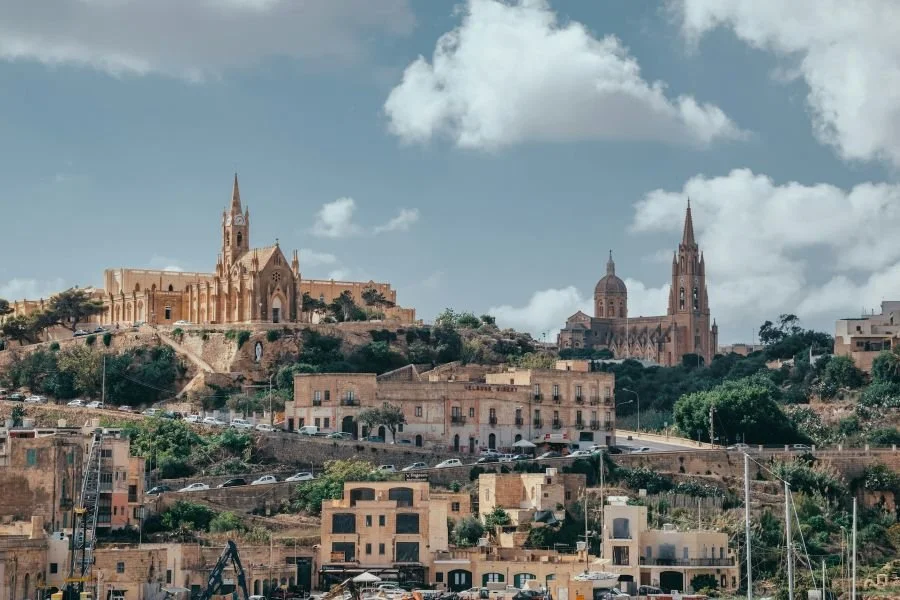
Ta’ Pinu Basilica is this big church standing alone in the countryside near the village of Għarb. It was built on the spot where a local woman reportedly heard the Virgin Mary speak in 1883. The interior is covered with votive offerings and letters from pilgrims. Even if you are not religious the architecture is impressive and it is one of those places that just feels peaceful.
The Xwejni salt pans stretch along the northern coast, these geometric patterns carved into rock over 300 years ago. Local families still harvest salt there in summer using the same methods as their ancestors. You can buy bags of it from little roadside stalls.
Wied il-Għasri is a hidden spot that most visitors miss. A narrow inlet cuts deep into the northern cliffs creating this fjord-like swimming hole. Getting down involves some scrambling but the water is crystal clear and the setting is gorgeous. The kind of place you feel like you discovered even though obviously other people know about it.
Day trip or longer
Most people do Gozo as a day trip and that works fine. You can see the main highlights if you start early and plan carefully. But it will feel rushed. There is something about the pace of Gozo that does not suit rushing.
If you have the time I would say stay at least one night. The island feels different in the evening when the day trippers have gone. The villages get quiet. The light goes golden on the limestone. You can have dinner somewhere without checking your watch to make sure you do not miss the last ferry.
Two or three nights is even better if you want to explore properly. Swim at a few different beaches. Walk some of the coastal paths. Sit in a village square and drink too much coffee. That is when Gozo really shows you what it has.
But honestly even a day trip is worth it. Something is better than nothing.
The transport problem
Here is the thing nobody warns you about. Getting to Gozo is easy. Getting around Gozo is not.
The ferry from Ċirkewwa on the northern tip of Malta takes about 20 minutes and runs frequently. You pay when you leave Gozo not when you arrive which is slightly odd but that is how it works. Costs something like €4.65 per person. There is also a fast ferry from Valletta that takes 45 minutes and drops you straight at Mġarr Harbour which is convenient if you are staying in that area.
The problem starts once you are on the island. Buses exist but they are unreliable. Routes run through Victoria in the middle which means getting anywhere involves changing and waiting. I have heard stories of people stranded for an hour or more because the bus just did not show up. If you are trying to see multiple places in one day the buses will make you miserable.
Renting a car works if you are comfortable driving on the left. The roads are quieter than Malta and the traffic is lighter. But you are limited to paved roads which means you miss some of the best coastal scenery which is only accessible on dirt tracks.
Taxis are expensive if you want one for the whole day. And you still cannot get to the off road spots.
The option I always recommend to people, especially those doing a day trip, is quad bike hire through a local tour operator. Someone who knows the island and handles all the logistics so you can just enjoy the day. Yippee Tours Gozo is one I have used myself and they were excellent. They do quad bike tours where you drive yourself in convoy behind a guide, which is genuinely fun if you want a bit of adventure and covers ground a rental car could never reach because the quads handle the rough terrain. They also do tuk tuk tours if you would rather have a driver do the work and prefer a more relaxed pace.
Either way the tour includes pickup from your accommodation in Malta, the ferry crossing, lunch, and usually a boat trip around Comino on the way back with a swim stop at the Blue Lagoon if the weather is good. Everything sorted. No waiting for buses that may or may not come. No figuring out where to park or where to eat. I did a quad tour with them last year and saw parts of the island I had never been to despite living here. Valleys and cliff paths and hidden bays that are not on any tourist map.
If you are staying on Gozo for multiple days and want more independence then rent a car. But for a day trip where you want to make the most of limited time the guided tour option is hard to beat.
When to go
Summer is warm and the beaches are swimmable but it gets crowded especially in July and August. The ferries pack out. The Blue Lagoon becomes a floating party with boats everywhere.
Spring is my favourite time. April and May especially. The weather is warm enough for swimming but the crowds have not arrived yet. The countryside is green and covered in wildflowers. Everything looks its best.
Autumn is similar. September and October still have warm water and sunny days but fewer people. The light gets softer and more golden.
Winter is mild but some things close or reduce hours. The sea can be rough which affects boat trips. But Gozo is beautiful year round and the lack of tourists has its own appeal.
Is it better than Malta
Different question. They are not competing.
Malta has Valletta which is genuinely one of the most impressive small cities I have seen anywhere. The history, the architecture, the Grand Harbour. It has Mdina, the prehistoric temples, the Blue Grotto. Proper city life in Sliema and St Julians.
Gozo has none of that urban energy. What it has is peace. Countryside. A slower pace. The kind of place you go to decompress rather than tick off sights.
Most people visiting the Maltese islands should see both. A week in Malta with a day or two on Gozo is a solid plan. You get the best of everything.
What I wish I knew before my first visit
The ferries from Ċirkewwa do not require advance booking. You just show up and get on the next one. But in summer the queues can be long so allow extra time.
Bring cash for small purchases. Card is accepted most places but the salt pans vendors and some village shops prefer euros.
Wear shoes you can walk in. The terrain is uneven and some of the best spots involve a bit of scrambling over rocks.
Sunscreen is essential even when it does not feel that hot. The Mediterranean sun is strong.
Download an offline map before you go. Signal is fine in the towns but patchy in some of the rural areas.
If you are prone to seasickness take something before the fast ferry from Valletta. It can get bumpy when the sea is rough. The bigger ferry from Ċirkewwa is more stable.
And bring a swimsuit. Even if you think you are just going to look at churches and temples. You will see water so blue it looks fake and you will want to get in. The water around Gozo is honestly ridiculous. Those photos you see online are not edited. It actually looks like that.
So yes it is worth it
Gozo is one of those places that does not try too hard to impress you but does it anyway. It is not flashy. It does not have big attractions that everyone knows about. What it has is beauty that sneaks up on you. A coastline that looks different every time you turn a corner. Villages that feel like they have not changed in decades. Peace and quiet that is increasingly rare.
Go for a day if that is all you have. Stay longer if you can. Either way I think you will understand why people keep coming back.
Disclosure: This is a collaborative post.